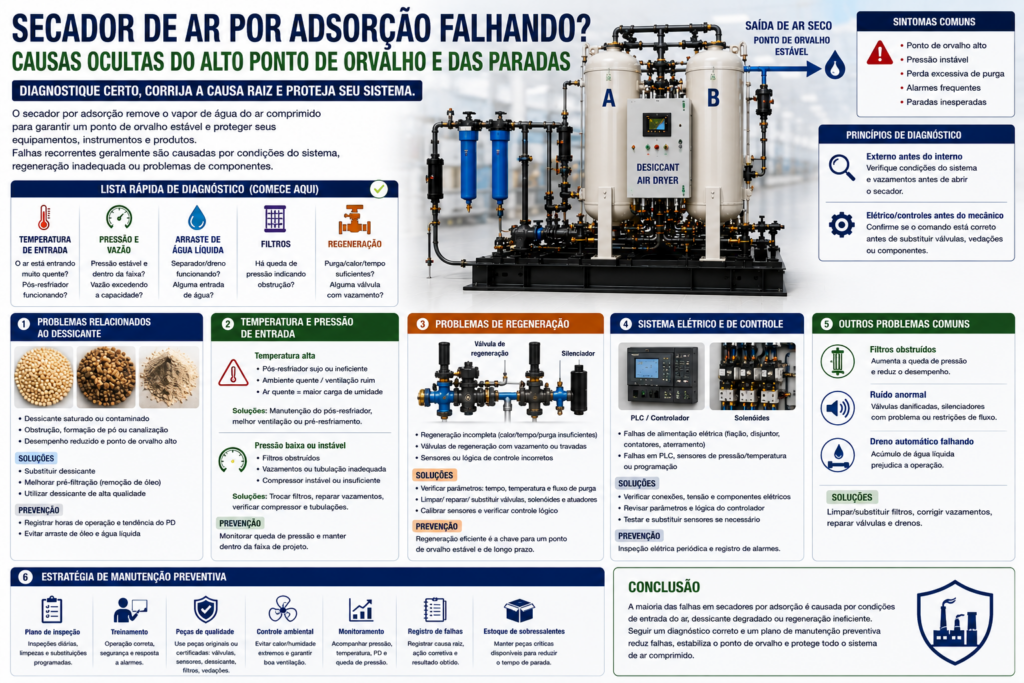
Um secador de ar por adsorção é projetado para remover vapor de água do ar comprimido e manter um ponto de orvalho sob pressão especificado.
Quando o desempenho se deteriora, os sintomas podem incluir ponto de orvalho elevado na saída, pressão instável nas torres, consumo excessivo de ar de purga, alternância anormal, alarmes ou paradas repetidas.
No entanto, o próprio secador nem sempre é a causa raiz.
Muitos problemas recorrentes têm origem nas condições ao redor do secador, incluindo temperatura de entrada excessiva, pressão instável, vazão acima da capacidade, arraste de água líquida, filtragem inadequada, regeneração incorreta ou mudanças na demanda da planta.
A abordagem de diagnóstico mais eficaz é, portanto:
Verificar primeiro as condições operacionais → verificar a regeneração → inspecionar válvulas e controles → avaliar o leito dessecante.
Para mais informações sobre a tecnologia e as configurações disponíveis, consulte a linha de secadores de ar por adsorção da Lingyu.
Comece pelas condições operacionais
Antes de substituir o dessecante, válvulas ou sensores, compare os dados operacionais reais com as condições operacionais especificadas do secador.
Verifique:
- Temperatura de entrada
- Pressão de entrada
- Vazão real de ar
- Drenagem a montante
- Condição dos filtros
- Pressão das torres
- Sequência de regeneração
- Ponto de orvalho na saída
Isso é importante porque os secadores por adsorção são projetados para condições operacionais definidas.
Por exemplo, várias séries de secadores regenerativos da Lingyu utilizam pressão nominal de entrada de 0,7 MPa, com faixa operacional de 0,6–1,0 MPa. Muitos modelos regenerativos convencionais possuem temperaturas nominais de entrada de 10–30 °C e temperatura máxima de entrada de ≤40 °C.
Esses valores não devem ser aplicados universalmente a todos os secadores. Os limites operacionais corretos devem sempre ser confirmados para o modelo específico.
1. Temperatura de entrada elevada
Uma temperatura de entrada elevada pode aumentar a carga de umidade que entra em um secador por adsorção.
Um sistema que funciona corretamente em condições mais frias pode, portanto, apresentar dificuldades se o resfriamento da descarga do compressor piorar ou se as condições ambientais mudarem.
Verifique o pós-resfriador, as condições do ar ou da água de resfriamento, a ventilação, o desempenho do separador e a temperatura real medida na entrada do secador.
Se a temperatura de entrada ultrapassar a condição de projeto do secador selecionado, corrija primeiro esse problema a montante antes de presumir que o dessecante falhou.
Em algumas séries regenerativas da Lingyu, a temperatura nominal normal de entrada é de 10–30 °C, com temperatura máxima de entrada de ≤40 °C, embora outras tecnologias e modelos de secadores possam possuir limites diferentes.
2. Vazão excessiva ou pressão de entrada instável
Um secador selecionado para determinada vazão não necessariamente consegue manter o mesmo ponto de orvalho quando a vazão real aumenta significativamente acima de sua capacidade de projeto.
Uma vazão maior reduz o tempo efetivo de contato através do leito de adsorção e também aumenta a carga de umidade que precisa ser tratada durante cada ciclo.
Pressão baixa ou instável pode gerar problemas adicionais na adsorção, na vazão de purga, na repressurização e na alternância das torres.
Verifique a vazão real da planta em vez de se basear apenas na capacidade nominal do compressor. Analise também usuários pneumáticos adicionados recentemente, demanda simultânea, perdas na tubulação e queda de pressão nos filtros.
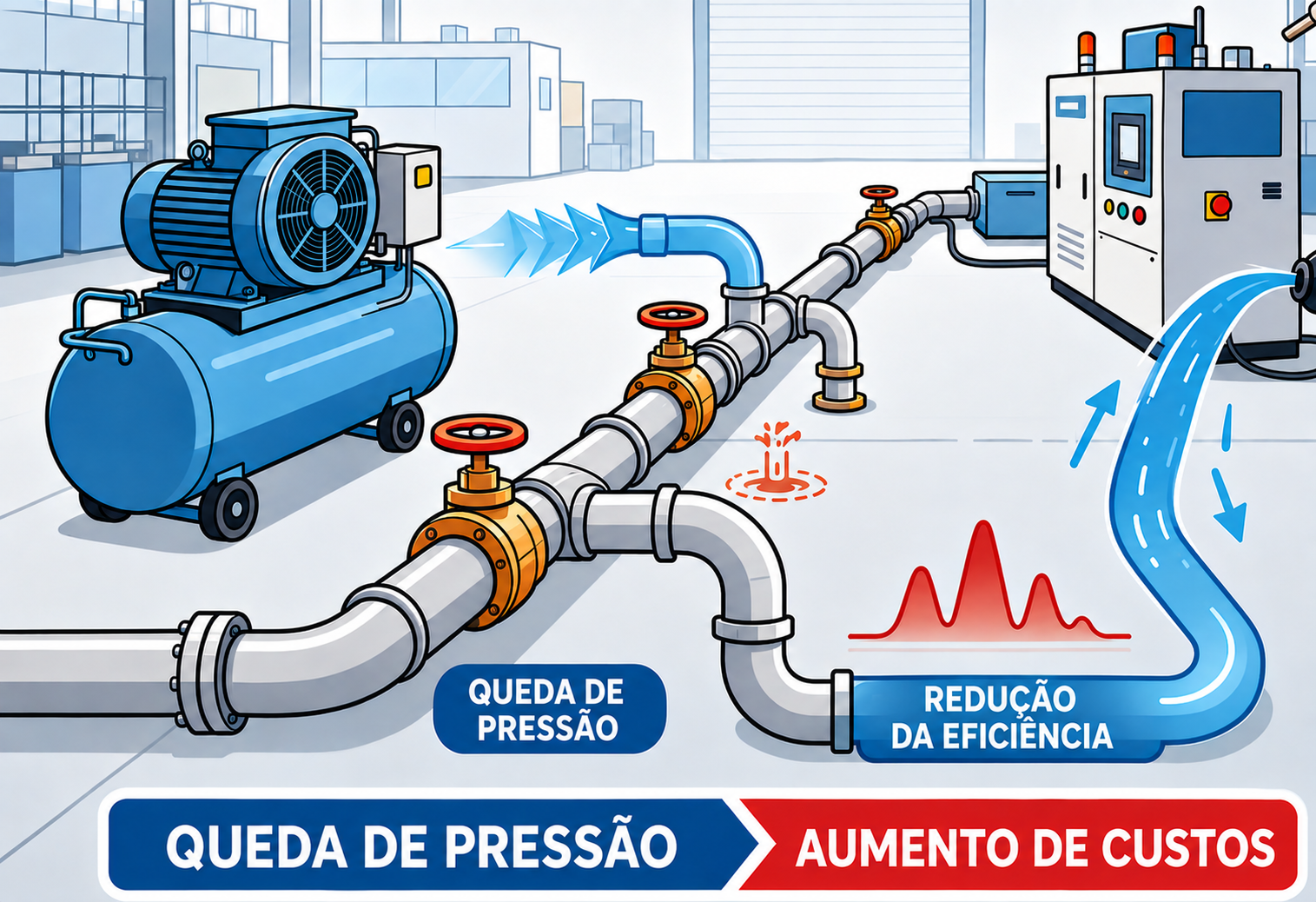
Se a própria perda de pressão for o principal sintoma, o diagnóstico deve se concentrar na queda de pressão do secador por adsorção.
3. Entrada de água líquida no secador
Um secador por adsorção é destinado principalmente à remoção de vapor de água.
A entrada de grandes quantidades de condensado líquido no leito de adsorção cria uma carga de umidade muito mais severa e pode afetar negativamente tanto o dessecante quanto o processo de regeneração.
Inspecione:
- Desempenho do pós-resfriador
- Separador ar-água
- Drenos automáticos
- Drenagem do reservatório
- Pré-filtros
- Qualquer etapa de pré-tratamento por refrigeração
O sistema combinado de secagem da Lingyu demonstra claramente o valor do pré-tratamento: a etapa por refrigeração remove uma parte significativa da umidade antes da etapa de adsorção, reduzindo a carga de umidade sobre o dessecante e diminuindo a demanda de regeneração.
Quando aplicável, um secador de ar por refrigeração pode fazer parte dessa etapa de pré-tratamento.
Se água líquida atingir repetidamente o secador, corrigir o problema de drenagem ou separação a montante é mais importante do que simplesmente substituir o dessecante.
4. Contaminação por óleo e partículas
A contaminação do ar comprimido pode afetar filtros, válvulas, tubulações, dessecante e a qualidade do ar a jusante.
A contaminação por óleo é particularmente importante porque um meio adsorvente contaminado pode não se recuperar simplesmente através de um ciclo normal de regeneração.
Se houver óleo, investigue o compressor, o separador, os drenos e o sistema de filtragem, em vez de tratar o secador como um componente isolado.
Em sistemas combinados de secagem, um filtro para remoção de óleo pode ser instalado antes da etapa de secagem por adsorção para ajudar a proteger o dessecante e os equipamentos a jusante.
Dependendo da configuração necessária, um filtro de precisão para ar comprimido pode fazer parte desse sistema de tratamento.
Se o problema principal for excesso de óleo, a causa deve ser investigada em nível de sistema.
5. Regeneração incompleta
Um leito dessecante só pode retornar ao serviço de adsorção de forma eficaz se a etapa anterior de regeneração tiver sido concluída corretamente.
Essa é uma das áreas mais importantes a investigar quando o ponto de orvalho piora progressivamente ao longo de ciclos sucessivos.
O mecanismo de regeneração necessário depende do tipo de secador.
Um secador sem aquecimento utiliza ar seco produzido para regeneração. Um secador com purga aquecida utiliza calor e ar de purga. Um secador aquecido por soprador pode utilizar ar ambiente do soprador durante a regeneração, enquanto alguns projetos de purga zero utilizam diferentes configurações de aquecimento e resfriamento.
Por exemplo, o projeto HH com purga aquecida da Lingyu utiliza calor externo juntamente com uma parte do ar seco produzido. A dessorção, por si só, não completa o processo de regeneração; o dessecante também precisa resfriar suficientemente antes de retornar ao serviço completo de adsorção.
Um ponto de orvalho elevado pode, portanto, estar relacionado a:
- Aquecimento incompleto
- Purga insuficiente
- Resfriamento incompleto
- Tempo incorreto da sequência
- Falha de um componente de regeneração
Antes de substituir o dessecante, confirme se toda a sequência de regeneração está realmente sendo concluída.
6. Vazão incorreta de ar de regeneração
Ar de regeneração insuficiente pode deixar um excesso de umidade no leito de adsorção.
Por outro lado, uma vazão excessiva de ar de purga pode desperdiçar ar comprimido e reduzir a vazão líquida utilizável disponível para a planta.
Não existe um único percentual correto de purga para todos os secadores por adsorção, pois os requisitos de ar de regeneração variam conforme o projeto.
Por exemplo:
- Série HH com purga aquecida: consumo médio de ar de purga de 4–8%
- Série HRB-E aquecida por soprador com baixa purga: aproximadamente 2–3%
Se a vazão de purga parecer anormal, utilize a especificação do modelo exato do secador em vez de ajustar a válvula com base em um percentual genérico.
7. Problemas no aquecedor, soprador ou resfriamento
Em secadores aquecidos e regenerados por soprador, o diagnóstico do ponto de orvalho deve incluir os equipamentos responsáveis pela regeneração.
As possíveis áreas a serem inspecionadas incluem:
- Funcionamento do aquecedor
- Temperatura de regeneração
- Funcionamento do soprador
- Desempenho do resfriamento
- Vazão de ar de regeneração
- Sequência entre aquecimento e resfriamento
Alguns projetos da Lingyu aquecidos por soprador monitoram parâmetros como temperatura do ar na saída, temperatura de aquecimento, temperatura da descarga de regeneração, pressão das torres A/B, pressão do soprador e, opcionalmente, ponto de orvalho sob pressão.
Essas tendências operacionais podem ajudar a distinguir um problema real de adsorção de um problema no sistema de regeneração.
Não substitua o dessecante apenas porque o ponto de orvalho na saída está elevado se o aquecedor, soprador, estágio de resfriamento ou vazão de regeneração não estiverem funcionando corretamente.
8. Vazamento nas válvulas de alternância ou sequência incorreta das válvulas
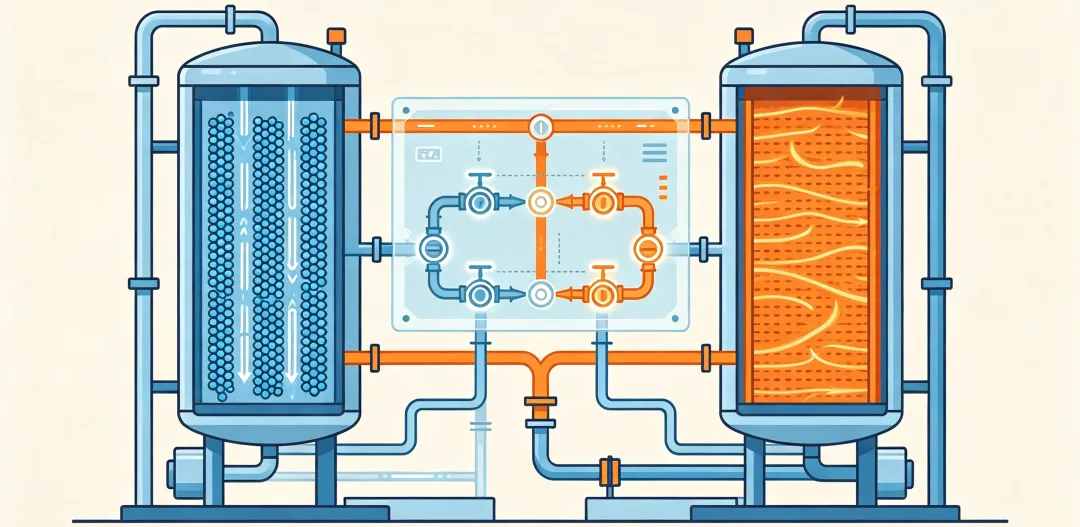
Secadores de duas torres dependem de uma alternância confiável entre adsorção e regeneração.
Se uma válvula de entrada, saída, purga, descarga, equalização ou retenção não atingir a posição correta, o secador pode apresentar perda de pressão, regeneração inadequada, fluxo cruzado entre as torres ou ponto de orvalho anormal.
As possíveis causas incluem:
- Problemas nos atuadores
- Falhas nas solenoides
- Contaminação
- Superfícies de vedação desgastadas
- Sinais de controle incorretos
- Travamento mecânico
Os secadores regenerativos da Lingyu utilizam válvulas pneumáticas e repressurização/equalização automáticas para estabilizar a pressão das torres antes da alternância.
Se a própria alternância das torres parecer anormal, o diagnóstico deve se concentrar na sequência de comutação do secador por adsorção.
9. Descarga de regeneração contínua ou anormal
Ouvir a descarga não indica automaticamente uma falha do secador.
Secadores sem aquecimento e com purga aquecida descarregam intencionalmente ar de regeneração durante determinadas etapas operacionais.
O problema ocorre quando a descarga não corresponde à sequência de regeneração esperada, permanece aberta quando a torre deveria estar sendo repressurizada ou provoca uma perda inexplicada de pressão no sistema.
Uma sequência útil de diagnóstico é:
Status do controlador → pressão da torre → comando da válvula → comportamento da descarga
Isso ajuda a determinar se a descarga faz parte da regeneração normal ou se existe um problema de válvula, atuador, controle ou sequência de pressão.
10. Formação de pó e degradação mecânica do dessecante
Em operação regenerativa normal, o dessecante não fica simplesmente “cheio de umidade para sempre”.
Uma deterioração mais persistente pode resultar de desgaste físico, contaminação, choques repetidos de pressão, movimentação dentro do leito de adsorção ou outras condições operacionais de longo prazo.
Os sintomas podem incluir:
- Aumento de pó a jusante
- Silenciadores ou filtros contaminados
- Maior queda de pressão
- Redução do desempenho de adsorção
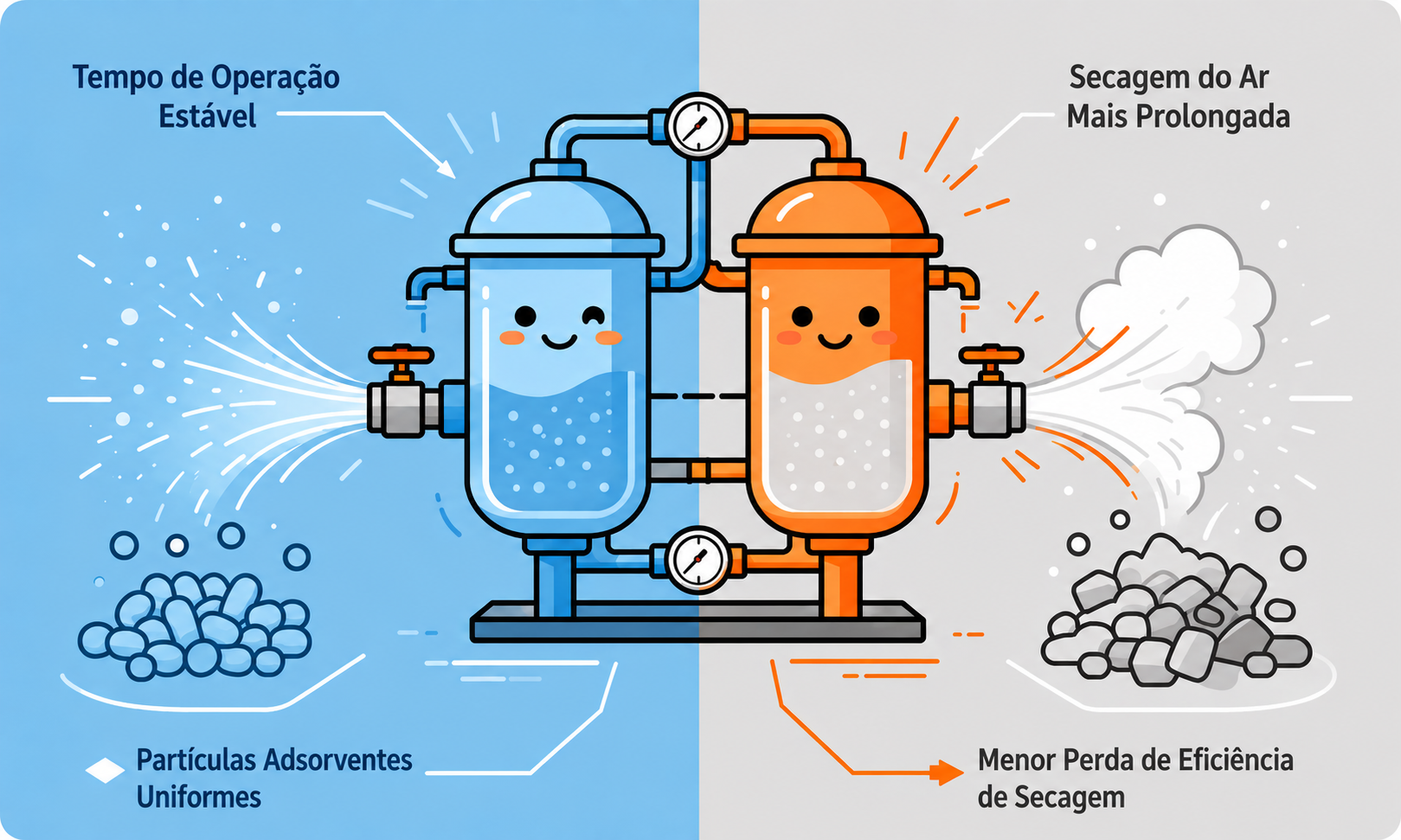
Os projetos de secadores regenerativos da Lingyu utilizam dessecantes selecionados por sua resistência mecânica e à abrasão, enquanto a repressurização e a equalização de pressão ajudam a reduzir o impacto da pressão sobre o material adsorvente.
Se o principal sintoma for arraste de pó, o diagnóstico deve se concentrar nas causas da liberação de partículas do dessecante.
11. Canalização ou distribuição desigual do ar
Um leito dessecante deve distribuir o ar comprimido de forma eficaz através do meio adsorvente.
Se o fluxo de ar desenvolver caminhos preferenciais através do leito, parte do dessecante poderá ser subutilizada enquanto a umidade atravessa o sistema antes do esperado.
Os possíveis fatores contribuintes incluem:
- Assentamento do leito
- Compactação inadequada
- Componentes de suporte danificados
- Condições anormais de fluxo de ar
Não presuma que existe canalização apenas porque o ponto de orvalho está elevado.
Primeiro elimine problemas relacionados às condições de entrada, regeneração incompleta, falhas de válvulas, contaminação e erros de medição.
Se o comportamento da pressão e a condição do dessecante indicarem um problema de distribuição no leito, a canalização deve ser investigada.
12. Filtros e silenciadores podem criar problemas secundários
Um pré-filtro muito carregado pode reduzir a pressão de entrada do secador.
Um pós-filtro bloqueado pode aumentar a queda de pressão a jusante.
Um silenciador de descarga contaminado ou um componente do fluxo de regeneração pode interferir na despressurização normal ou na vazão de purga.
A manutenção dos filtros deve, portanto, ser baseada na queda de pressão permitida pelo fabricante, na condição de contaminação e no histórico operacional, e não em um único limite universal de substituição.
Da mesma forma, os elementos filtrantes não devem ser automaticamente substituídos com base em um intervalo genérico de calendário.
A pressão diferencial, as horas de operação, a carga de contaminação e os requisitos de manutenção do fabricante específico devem ser considerados em conjunto.
13. Problemas no controlador e nos sensores
Secadores regenerativos modernos dependem da lógica de controle para coordenar adsorção, despressurização, regeneração, resfriamento, repressurização e alternância das torres.
Um sinal incorreto de pressão, temperatura ou ponto de orvalho pode, portanto, fazer um secador mecanicamente saudável parecer estar com defeito.
Verifique se os valores exibidos são fisicamente plausíveis e se as ações das válvulas correspondem à etapa operacional comandada.
Analise também alterações recentes nos parâmetros antes de presumir que o próprio programa do PLC falhou.
Os programas de controle não devem ser modificados de forma indiscriminada durante o diagnóstico. Se a configuração parecer corrompida ou a sequência operacional não corresponder mais ao projeto previsto, restaure parâmetros verificados ou envolva pessoal técnico qualificado.
14. A medição do ponto de orvalho também pode ser o problema
Antes de realizar grandes reparos mecânicos, verifique se a leitura do ponto de orvalho é confiável.
Um sensor exposto à contaminação, instalado incorretamente ou operando fora de suas condições de medição pode produzir dados enganosos.
Compare a leitura do analisador com os outros indicadores operacionais do secador e, quando apropriado, verifique-a utilizando um instrumento confiável ou um método de calibração aprovado pelo fabricante.
Isso é especialmente importante quando o secador parece mecanicamente normal, mas o ponto de orvalho informado muda repentinamente sem alterações correspondentes de pressão, vazão, regeneração ou temperatura.
15. Evite substituir o dessecante cedo demais
Um ponto de orvalho elevado não significa automaticamente que o dessecante precisa ser substituído.
Antes de substituir toda a carga de material adsorvente, verifique:
Temperatura de entrada → vazão → pressão → controle de água líquida → filtragem → vazão de regeneração → desempenho do aquecedor/soprador → sequência das válvulas → medição do ponto de orvalho
Se todas essas condições estiverem corretas e o secador ainda não conseguir atingir o desempenho especificado, a condição do dessecante se torna uma suspeita mais provável.
Essa ordem de diagnóstico pode evitar a substituição de um meio adsorvente de alto custo enquanto a verdadeira causa raiz permanece sem solução.
16. A manutenção preventiva deve ser baseada na condição
Os intervalos de manutenção variam de acordo com o tipo de secador, frequência dos ciclos, qualidade do ar de entrada, contaminação, ambiente operacional e horas de funcionamento.
Por esse motivo, a manutenção preventiva deve combinar os requisitos de manutenção do modelo específico com o monitoramento da condição, em vez de depender de um cronograma genérico diário, mensal ou de substituição aplicável a todos os secadores.
Entre as tendências operacionais úteis para acompanhar estão:
- Pressão de entrada e saída
- Temperatura de entrada
- Pressão diferencial dos filtros
- Sequência de pressão das torres
- Ponto de orvalho na saída
- Temperatura de regeneração, quando aplicável
- Comportamento da purga
- Condição da drenagem
- Histórico de alarmes
- Horas de operação
Registre também o que mudou antes de cada falha.
Problemas recorrentes de ponto de orvalho costumam ser muito mais fáceis de diagnosticar quando os operadores conseguem determinar se temperatura, vazão, pressão, regeneração ou filtragem se alteraram primeiro.
Uma sequência prática de diagnóstico
Quando o ponto de orvalho na saída aumentar ou o secador apresentar alarmes repetidos, utilize esta sequência:
Verificar a leitura do ponto de orvalho → verificar a temperatura de entrada → confirmar a vazão real e a pressão de entrada → inspecionar a separação de água líquida e os drenos → verificar a filtragem e a contaminação por óleo → confirmar a sequência e a vazão de regeneração → inspecionar as funções do aquecedor/soprador, quando aplicável → comparar a pressão das torres com os comandos de alternância → investigar vazamentos nas válvulas → inspecionar a condição do dessecante e a distribuição do leito
Essa sequência mantém a investigação concentrada primeiro nas condições mais acessíveis do sistema antes de avançar para uma inspeção interna invasiva.
Segurança durante o diagnóstico
Secadores regenerativos contêm vasos pressurizados, válvulas operadas automaticamente, equipamentos elétricos e, nos projetos aquecidos, componentes de alta temperatura.
Antes da inspeção mecânica:
- Isole o secador das fontes de pressão e energia
- Despressurize o equipamento de acordo com o procedimento aprovado
- Impeça a partida automática
- Siga os requisitos de bloqueio e etiquetagem (lockout/tagout) do local
Trabalhos internos nas torres, testes do aquecedor, desmontagem de válvulas, diagnóstico elétrico e alterações nos parâmetros do controlador devem ser realizados por pessoal qualificado utilizando a documentação correta do modelo.
Conclusão
Falhas repetidas em um secador de ar por adsorção raramente são explicadas por um único sintoma.
Um ponto de orvalho elevado pode resultar de carga excessiva de umidade na entrada, temperatura elevada, sobrecarga, pressão instável, pré-tratamento inadequado, regeneração incorreta, problemas de válvulas, contaminação, erro de sensor ou deterioração real do dessecante.
A abordagem de diagnóstico mais confiável não é:
“Ponto de orvalho elevado = substituir o dessecante.”
Em vez disso, diagnostique o secador como parte de todo o sistema de ar comprimido:
Medição → condições de entrada → pré-tratamento → regeneração → válvulas e controles → leito dessecante
Quando a causa raiz é corrigida, em vez de apenas o sintoma visível, torna-se muito mais fácil manter a estabilidade do ponto de orvalho e a confiabilidade do secador.