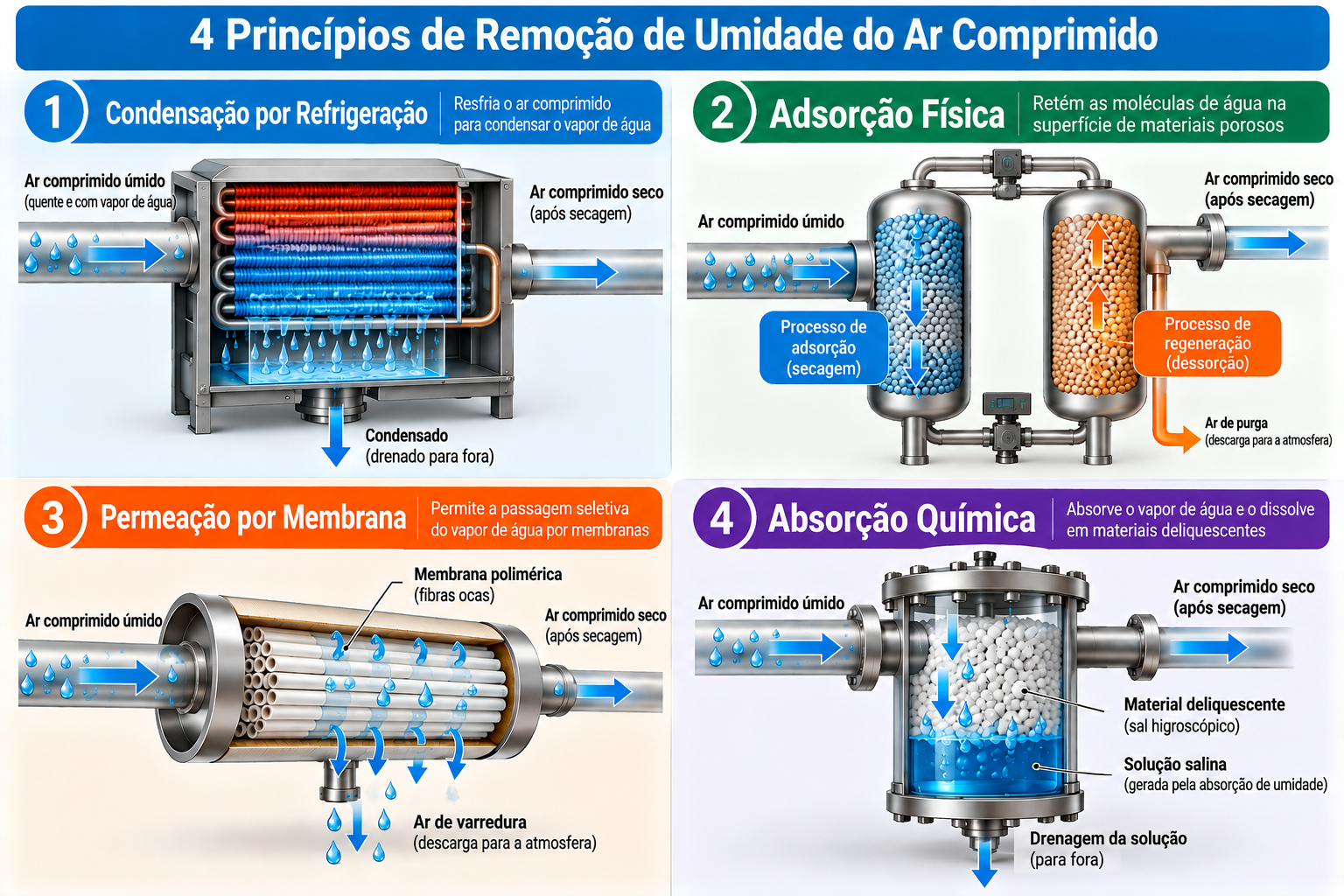
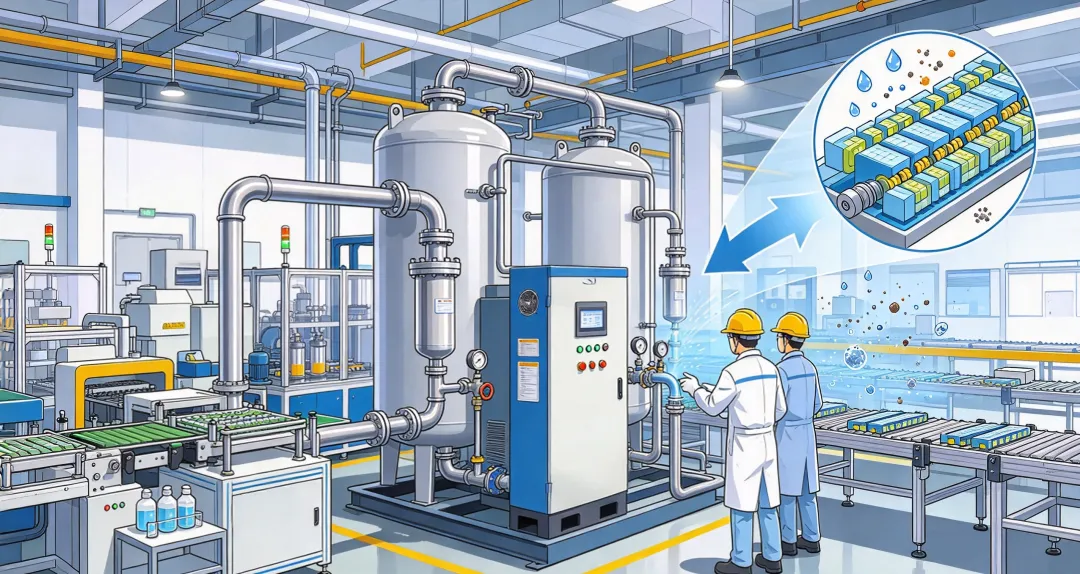
O ar comprimido industrial pode conter vapor de água, umidade condensada, contaminação por óleo e partículas. Sem um tratamento de ar adequado, esses contaminantes podem contribuir para corrosão das tubulações, problemas em equipamentos pneumáticos, instabilidade do processo e redução da qualidade do produto.
Quando uma aplicação exige um ponto de orvalho sob pressão muito mais baixo do que um secador por refrigeração normalmente pode fornecer, pode ser necessário utilizar um secador dessecante ou por adsorção.
Um secador de ar por adsorção com regeneração aquecida, também chamado de secador dessecante regenerativo com purga aquecida, utiliza uma fonte externa de calor juntamente com uma quantidade controlada de ar seco de produto para regenerar o dessecante. Em comparação com a regeneração sem aquecimento, o uso de calor reduz a quantidade de ar comprimido de purga necessária.
O portfólio de produtos da Lingyu inclui secadores regenerativos por adsorção aquecidos dedicados das Séries CH e HH.
O que é um secador de ar por adsorção com regeneração aquecida?
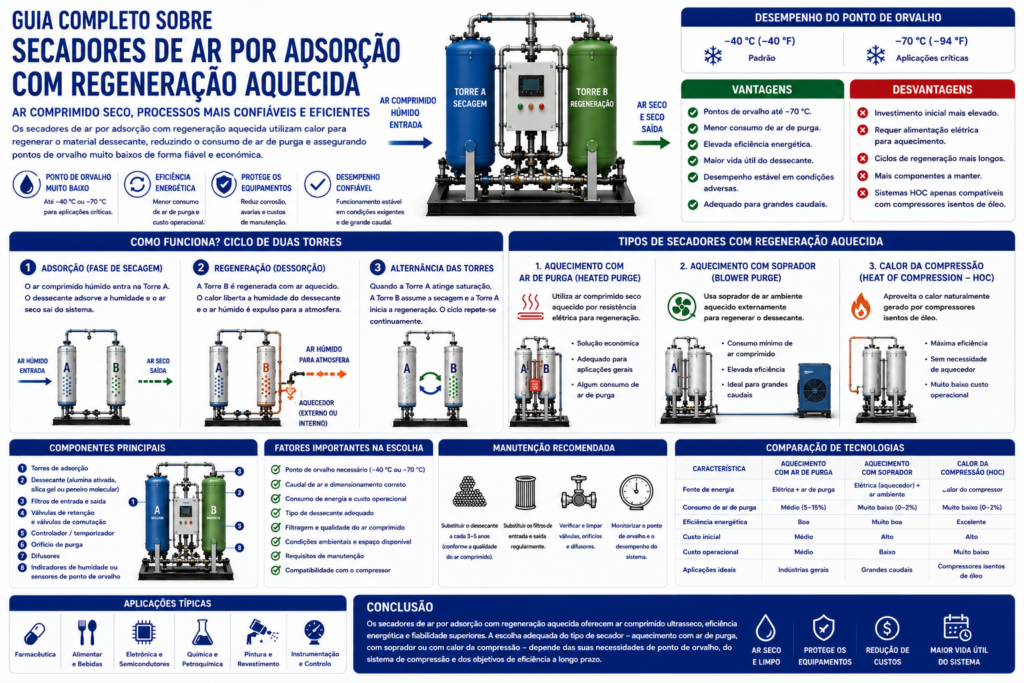
Um secador de ar por adsorção com regeneração aquecida é um secador dessecante de duas torres que remove vapor de água por adsorção e restaura o dessecante carregado de umidade utilizando calor.
Uma torre permanece em serviço de adsorção enquanto a segunda passa pelo processo de regeneração. Após a regeneração e o resfriamento serem concluídos, as torres trocam de função para que o ar comprimido seco possa ser fornecido continuamente.
A principal diferença em relação a um secador sem aquecimento está no método de regeneração.
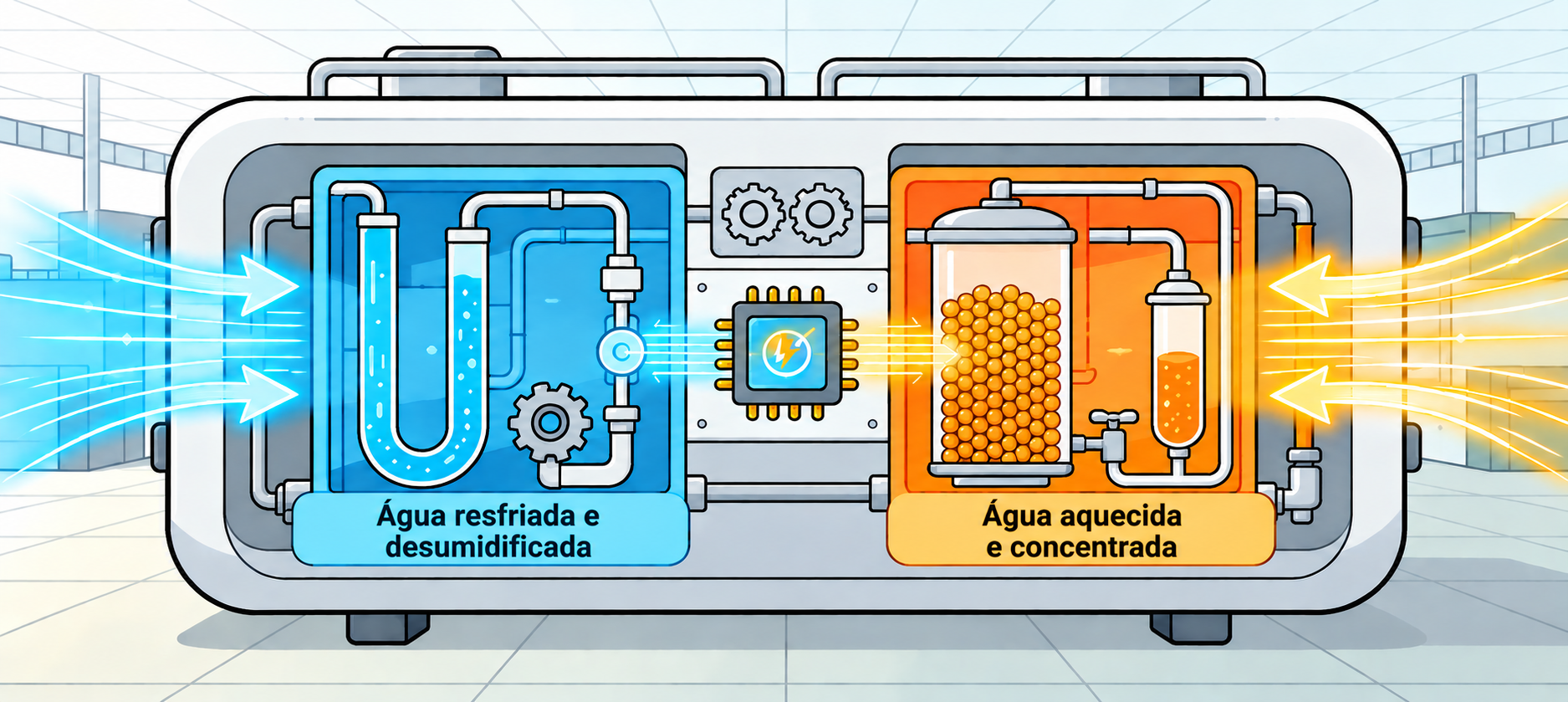
Um secador sem aquecimento depende inteiramente de ar comprimido seco de purga para criar as condições necessárias à dessorção. Um secador com purga aquecida adiciona energia térmica. O aquecimento do dessecante facilita a liberação da água adsorvida, reduzindo a quantidade de ar comprimido seco necessária como gás de transporte durante a regeneração.
A Lingyu descreve seu processo de purga aquecida como Adsorção por Oscilação de Temperatura (TSA). O dessecante adsorve umidade em temperatura mais baixa e a libera quando aquecido.
Como funciona um secador por adsorção com regeneração aquecida?
O ciclo completo de operação inclui adsorção, dessorção aquecida, resfriamento, repressurização e comutação das torres.
1. Adsorção
O ar comprimido úmido entra no vaso de adsorção ativo.
O vapor de água é retido pelo dessecante, enquanto o ar comprimido seco sai da torre e segue para o sistema de ar a jusante.
Durante esse período, a segunda torre passa pelo processo de regeneração.
2. Dessorção aquecida
Uma fonte externa de calor fornece a energia térmica necessária para a regeneração.
Uma parte do ar seco de produto passa pelo sistema de aquecimento e pela torre de regeneração, transportando calor para o leito dessecante.
À medida que a temperatura do dessecante aumenta, a umidade anteriormente adsorvida é liberada de volta para a fase gasosa e transportada para fora do secador pelo fluxo de ar de regeneração.
Essa combinação de calor externo e fluxo controlado de ar seco de purga permite regenerar o dessecante utilizando menos ar comprimido de purga do que um secador convencional sem aquecimento.
3. Resfriamento
Aquecer o dessecante é apenas uma parte do processo de regeneração.
Após a dessorção, o leito de adsorção permanece quente. Sua capacidade total de adsorção só é restaurada depois que ele esfria em direção à temperatura normal de adsorção.
Portanto, a sequência de regeneração inclui:
Dessorção aquecida → regeneração por resfriamento
Um leito dessecante regenerado, mas ainda quente, não está imediatamente pronto para retornar à plena capacidade de secagem.
4. Repressurização e comutação das torres
Antes que uma torre regenerada retorne à adsorção, a pressão é equalizada.
O secador regenerativo aquecido da Lingyu inclui repressurização automática antes da comutação, ajudando a reduzir flutuações de pressão e perturbações mecânicas no leito dessecante.
Em seguida, as torres trocam de função e o ciclo continua.
Secador com regeneração aquecida Série CH
O secador de ar por adsorção com regeneração aquecida Série CH da Lingyu utiliza alumina ativada como dessecante especificado.
Suas principais especificações operacionais incluem:
| Parâmetro | Especificação |
|---|---|
| Pressão nominal de entrada | 0,7 MPa |
| Pressão de operação | 0,6–1,0 MPa |
| Temperatura nominal de entrada | 10–30 °C |
| Temperatura máxima de entrada | ≤40 °C |
| Consumo médio de ar de purga | 4–8% |
| Ponto de orvalho sob pressão na saída | −50 °C a −20 °C |
| Dessecante | Alumina ativada |
| Faixa de temperatura ambiente de operação | 2–45 °C |
Secador com regeneração aquecida Série HH
O secador dessecante regenerativo com purga aquecida Série HH utiliza uma combinação de alumina ativada e peneira molecular de alto desempenho.
Suas condições especificadas incluem:
| Parâmetro | Especificação |
| Consumo médio de ar de purga | 4–8% |
| Ponto de orvalho sob pressão na saída | ≤−40 °C |
| Dessecante | Alumina ativada + peneira molecular de alto desempenho |
| Pressão nominal de entrada | 0,7 MPa |
| Pressão de operação | 0,6–1,0 MPa |
| Temperatura máxima de entrada | ≤40 °C |
| Faixa de temperatura ambiente de operação | 2–45 °C |
Para informações técnicas mais específicas do modelo, consulte o guia da Série HH de secadores por adsorção com regeneração térmica.
CH vs. HH: secadores com regeneração aquecida
As duas séries utilizam o mesmo princípio geral de regeneração por purga aquecida, mas diferem na configuração do dessecante e no desempenho especificado de ponto de orvalho.
| Parâmetro | CH com purga aquecida | HH com purga aquecida |
| Método de regeneração | Calor externo + ar seco de purga | Calor externo + ar seco de purga |
| Consumo médio de ar de purga | 4–8% | 4–8% |
| Ponto de orvalho sob pressão na saída | −50 °C a −20 °C | ≤−40 °C |
| Dessecante | Alumina ativada | Alumina ativada + peneira molecular de alto desempenho |
| Pressão nominal de entrada | 0,7 MPa | 0,7 MPa |
| Pressão de operação | 0,6–1,0 MPa | 0,6–1,0 MPa |
| Temperatura máxima de entrada | ≤40 °C | ≤40 °C |
Esses valores específicos de produto fornecem uma base mais útil para seleção do que aplicar uma única faixa genérica de ponto de orvalho a todos os secadores regenerativos aquecidos.
Qual ponto de orvalho um secador com regeneração aquecida pode alcançar?
Na linha convencional de produtos com purga aquecida da Lingyu, os pontos de orvalho sob pressão especificados diferem entre as duas séries.
A Série CH é especificada para −50 °C a −20 °C, enquanto a Série HH é especificada para ≤−40 °C.
O ponto de orvalho sob pressão deve ser selecionado de acordo com o requisito real do processo, em vez de simplesmente se especificar o menor valor possível.
Por que o aquecimento reduz o consumo de ar de purga?
A principal vantagem operacional em relação à regeneração sem aquecimento é a menor demanda de ar de purga.
Os secadores sem aquecimento CH e HH da Lingyu especificam consumo médio de purga de 8–14%. Seus equivalentes com purga aquecida especificam 4–8%.
Essa redução é importante porque o ar de purga já foi comprimido e seco.
A contrapartida energética é que o secador aquecido utiliza energia elétrica no aquecedor de regeneração.
Portanto, uma comparação econômica significativa deve considerar:
Eletricidade do aquecedor + custo de produção do ar de purga + queda de pressão + manutenção + horas anuais de operação
A presença de um aquecedor, por si só, não determina o custo total de operação, assim como um menor consumo de purga não garante, por si só, o menor custo ao longo do ciclo de vida.
Regeneração aquecida vs. secador sem aquecimento
Um secador sem aquecimento não possui aquecedor de regeneração e utiliza ar comprimido seco como meio de regeneração.
Isso torna o sistema relativamente simples, mas o consumo de ar de purga é maior.
Um secador com purga aquecida utiliza energia térmica adicional para que seja necessária uma quantidade menor de ar comprimido de purga.
Instalações que estejam comparando as duas tecnologias podem consultar a linha de secadores de ar por adsorção sem aquecimento.
A escolha prática depende do tamanho do sistema, das horas de operação, do custo de produção do ar comprimido, das preferências de manutenção e do ponto de orvalho sob pressão exigido.
Um secador com soprador aquecido é um secador com purga aquecida?
Não exatamente.
Um secador com soprador aquecido utiliza calor, mas sua fonte de ar de regeneração é diferente.
Os sistemas com soprador aquecido da Lingyu aspiram ar ambiente por meio de um soprador e aquecedor independentes, em vez de depender principalmente do ar comprimido de produto durante a regeneração.
A versão HRB-E de baixo consumo de purga utiliza aproximadamente 2% de ar seco de produto durante o resfriamento e especifica consumo total de ar de regeneração de 2–3%.
A versão HRB-Z utiliza resfriamento em circuito fechado e pode reduzir o consumo de ar comprimido para regeneração a aproximadamente 0%.
Portanto, a tecnologia com soprador aquecido é uma configuração de regeneração separada, e não simplesmente outra variante CH/HH com purga aquecida.
Para essa família de produtos, consulte a linha de secadores por adsorção com soprador e purga zero.
Calor de Compressão é a mesma tecnologia?
Não.
Um secador com Calor de Compressão (HOC) utiliza a energia térmica já presente no ar de descarga do compressor em alta temperatura.
Portanto, ele é fundamentalmente diferente de um secador convencional com purga aquecida, no qual um sistema dedicado de aquecimento externo fornece o calor de regeneração.
Os usuários que estejam avaliando a recuperação de calor do compressor podem consultar o secador com regeneração por calor de compressão.
A seleção de HOC depende da compatibilidade entre as condições de descarga do compressor e o projeto do secador, e esses requisitos não devem ser tratados como requisitos padrão de compressor para secadores CH ou HH com purga aquecida.
Proteção e controle do aquecedor
A regeneração aquecida introduz componentes que não existem em um secador básico sem aquecimento, portanto a temperatura e a proteção do aquecedor tornam-se importantes.
O projeto HH com purga aquecida da Lingyu inclui proteção de pressão do aquecedor destinada a evitar aquecimento a seco, juntamente com controle programável e repressurização automática.
O projeto também utiliza válvulas pneumáticas de comutação e silenciadores para dar suporte à estabilidade dos ciclos das torres e da operação de exaustão.
Essas funções ajudam a explicar por que a regeneração aquecida é mais complexa do que a regeneração sem aquecimento, mas pode reduzir o consumo de ar de purga.
Seleção do dessecante
Nos produtos com regeneração aquecida da Lingyu, a configuração do dessecante depende da série.
A Série CH utiliza alumina ativada.
A Série HH utiliza alumina ativada combinada com peneira molecular de alto desempenho.
Portanto, a configuração de dessecante especificada deve corresponder à série de produto selecionada, em vez de se presumir que todos os materiais adsorventes sejam opções padrão para todos os secadores com purga aquecida.
A regeneração aquecida prolonga a vida útil do dessecante?
A vida útil do dessecante depende de mais fatores do que apenas o método de regeneração.
O dessecante de alto desempenho da Lingyu oferece resistência à abrasão e desempenho estável de longo prazo do ponto de orvalho sob pressão. O secador também utiliza equalização automática de pressão para reduzir choques de pressão que poderiam afetar o dessecante.
Um bom controle da regeneração, comutação estável, qualidade adequada do ar de entrada e operação dentro das condições especificadas podem ajudar a preservar o desempenho do dessecante.
O momento da substituição deve ser baseado no desempenho real do secador e nos requisitos de manutenção específicos do modelo, em vez de se presumir um aumento universal da vida útil.
As condições de operação são importantes
Tanto para os secadores CH quanto HH com purga aquecida, a pressão nominal de entrada é de 0,7 MPa, com faixa de operação de aproximadamente 0,6–1,0 MPa.
A temperatura nominal de entrada é de 10–30 °C, com temperatura máxima de entrada de ≤40 °C. A faixa de temperatura ambiente de operação é de 2–45 °C.
Essas especificações são importantes porque a capacidade de adsorção e o desempenho da regeneração dependem da temperatura real de entrada, da pressão, da vazão e da carga de umidade.
Para configurações padrão acima de aproximadamente 150 m³/min, ou para requisitos especiais de pressão, material ou temperatura, o sistema deve ser selecionado de acordo com as condições detalhadas do projeto.
Como selecionar um secador por adsorção com regeneração aquecida
A seleção deve começar pelos requisitos reais de qualidade do ar e pelas condições de operação.
Os fatores importantes incluem:
- ponto de orvalho sob pressão exigido;
- vazão máxima;
- pressão de entrada;
- temperatura de entrada;
- consumo de ar de purga;
- potência do aquecedor;
- contaminação a montante;
- queda de pressão;
- horas anuais de operação;
- ambiente de instalação;
- capacidade de manutenção.
Os compradores que já sabem que precisam de um projeto convencional com aquecimento externo podem consultar a página de secadores de ar por adsorção com regeneração aquecida.
A menor porcentagem de purga ou o menor ponto de orvalho anunciado não devem ser os únicos critérios de seleção.
Onde os secadores com regeneração aquecida são utilizados?
As aplicações mais relevantes são processos que exigem ar comprimido com baixo ponto de orvalho e possuem vazão ou horas de operação suficientes para que a redução do consumo de purga proporcione valor prático.
Fabricação farmacêutica e biofarmacêutica
Na fabricação farmacêutica e biofarmacêutica, a qualidade do ar comprimido pode ser importante em sistemas de produção e utilidades.
Consulte a página de dispositivos médicos e indústria farmacêutica.
Fabricação de semicondutores e PCB
Processos eletrônicos e de semicondutores também podem exigir condições controladas de umidade.
Usuários desse mercado podem consultar a página de eletrônicos e semicondutores.
Processamento petroquímico e químico
Instalações químicas e petroquímicas podem utilizar ar comprimido com baixo ponto de orvalho em aplicações de instrumentação e processo.
Consulte a página de fabricação de processos químicos.
A configuração correta do secador ainda deve ser selecionada com base nas especificações reais do processo, e não apenas no nome do setor.
Requisitos de manutenção
Um secador com purga aquecida exige manutenção tanto do sistema de adsorção quanto do sistema de aquecimento e regeneração.
As principais áreas incluem o dessecante, o tratamento do ar de entrada e saída, válvulas de comutação, atuadores pneumáticos, aquecedor, controle de temperatura, silenciadores, sistema de equalização de pressão, drenos e desempenho do ponto de orvalho na saída.
O aquecedor também deve ser inspecionado como parte da manutenção preventiva, pois o desempenho da regeneração depende do fornecimento de calor suficiente de forma segura e consistente.
Os intervalos de substituição do dessecante devem seguir as condições reais de operação, o desempenho do ponto de orvalho, o nível de contaminação, a condição mecânica e as orientações de manutenção específicas do modelo.
Purga aquecida vs. sem aquecimento vs. soprador aquecido
| Fator | Sem aquecimento | Purga aquecida | Soprador aquecido |
| Principal meio de regeneração | Ar comprimido seco | Ar comprimido seco aquecido | Ar ambiente aquecido por soprador |
| Aquecedor externo | Não | Sim | Sim |
| Referência de purga da Lingyu | 8–14% | 4–8% | HRB-E 2–3%; HRB-Z ≈0% |
| Complexidade da regeneração | Menor | Média | Maior |
| Principal vantagem | Regeneração simples | Menor purga do que sem aquecimento | Perda muito baixa de ar comprimido |
| Principal compromisso | Maior custo de purga | Energia do aquecedor | Complexidade de soprador/aquecedor/resfriamento |
Essa comparação separa as tecnologias de regeneração de acordo com suas fontes reais de fluxo de ar e energia, em vez de agrupá-las em um único tipo de produto.
Conclusão
Um secador de ar por adsorção com regeneração aquecida utiliza calor externo e uma quantidade controlada de ar seco de produto para regenerar um leito dessecante carregado de umidade.
Ao contrário da regeneração sem aquecimento, na qual apenas o ar de purga promove a dessorção, a regeneração aquecida utiliza a temperatura como uma força adicional de regeneração. Isso permite reduzir a necessidade de purga enquanto se mantém um baixo ponto de orvalho sob pressão.
Na linha convencional com purga aquecida da Lingyu:
- Série CH: consumo médio de ar de purga de 4–8%, ponto de orvalho sob pressão de −50 °C a −20 °C e alumina ativada.
- Série HH: consumo médio de ar de purga de 4–8%, ponto de orvalho sob pressão de ≤−40 °C e alumina ativada + peneira molecular de alto desempenho.
O secador opera por meio da sequência adsorção → dessorção aquecida → resfriamento → repressurização → comutação das torres, sendo a etapa de resfriamento essencial para restaurar o desempenho de adsorção.
Secadores com soprador aquecido e secadores com Calor de Compressão podem reduzir ainda mais as perdas de ar comprimido durante a regeneração, mas são tecnologias separadas, com diferentes requisitos de fluxo de ar, resfriamento, energia e integração.
Portanto, o sistema correto deve ser selecionado de acordo com o ponto de orvalho sob pressão exigido, vazão, custo do ar de purga, energia do aquecedor, condições de entrada, horas anuais de operação, ambiente de instalação, queda de pressão e capacidade de manutenção.